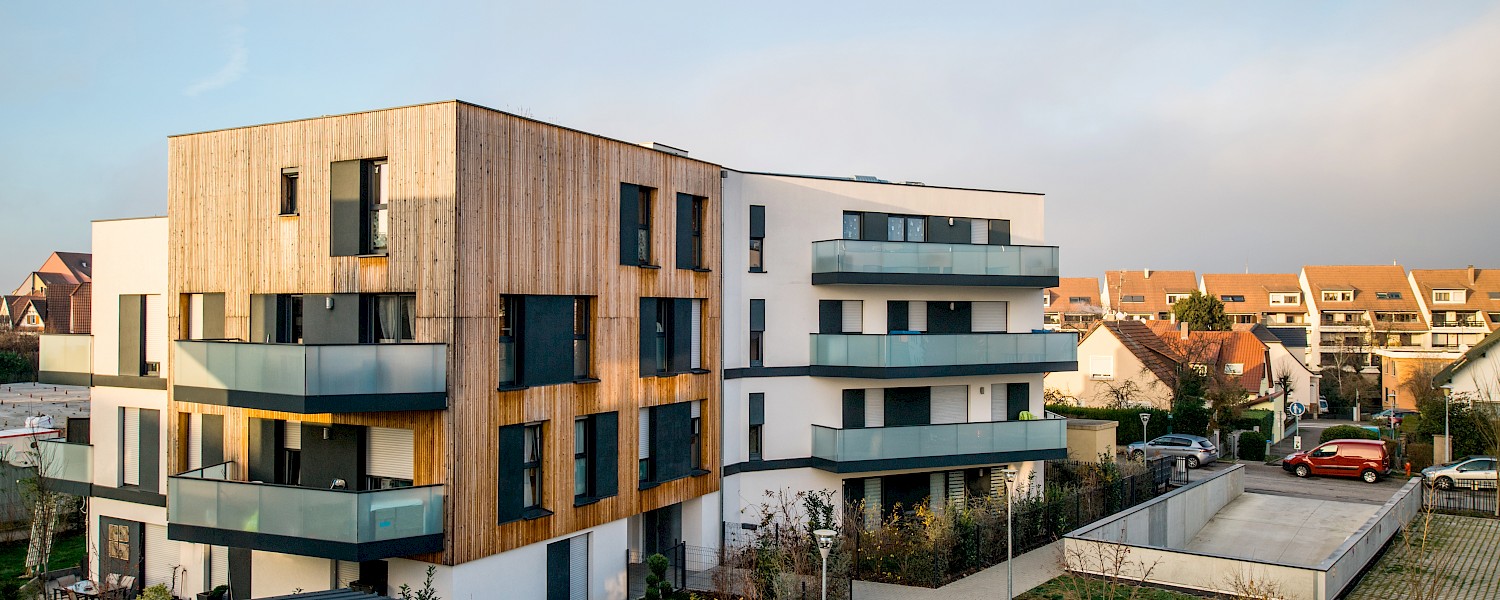
Through the ‘Booster fir de Wunnengsbau’ measures, the Government aims to boost construction, make it easier for people to get on the property ladder and develop more affordable housing.
Unveiled on 16 July 2026 and subsequently set out in draft legislation on 24 July 2026, this plan sets out a number of tax and financial measures that directly affect homebuyers, investors and property developers.
Why these new measures?
For several years now, Luxembourg has been facing a slowdown in construction and a shortage of housing supply. The result is high prices and home ownership becoming more difficult for many households.
With the “Booster fir de Wunnengsbau” scheme, the Government is pursuing three objectives:
- to build more homes;
- to make home ownership more accessible;
- to increase the supply of affordable rental accommodation.
The 7 key measures
1. An exemption from registration fees on certain off-plan sales (VEFA)
People buying a property as their main residence under an off-plan sale (VEFA) will be eligible for a temporary exemption from registration and title transfer duties on the construction portion. This measure applies where the building is no more than 80 per cent complete at the time of purchase. Duties will remain payable only on the value of the land.
The aim is to reduce the purchase cost of new homes and to support projects currently on the market. This measure is set to run for three years, starting on 16 July 2026.
2. The Bëllegen Akt tax credit rises to €45,000
The Bëllegen Akt tax credit has been increased. The amount rises from €40,000 to €45,000 per buyer for a purchase intended as a main residence. In practical terms, a couple will be able to benefit from a tax relief of up to €90,000, which significantly reduces the costs associated with buying a property.
According to the Government, this increase will, in particular, enable buyers to purchase a property costing around €640,000 without having to pay registration fees, provided all the conditions are met.
3. Enhanced support for young buyers
The package also provides for improved housing support. For first-time buyers where at least one borrower is aged 35 or under, the ceiling on the loan amount eligible for the interest subsidy has been raised to €300,000, up from €200,000 previously. For other households, the ceiling rises to €250,000.
This change aims to reduce monthly mortgage repayments and make it easier to buy a first home.
4. A reduced VAT rate of 8% for affordable rental accommodation
Another significant change is the introduction of an 8% VAT rate for certain social housing properties.
This reduction is subject to several conditions, including:
- a maximum floor area;
- a capped sale price;
- a commitment to let the property for at least ten years;
- a capped rental yield;
- the property must be let to a household recognised as eligible by the Ministry of Housing.
The aim is to encourage investors to create more affordable housing whilst ensuring its social purpose is maintained in the long term.
5. A new tax depreciation scheme for investors
The package provides for a new accelerated depreciation scheme based on the ‘three times six’ principle. Investors will be able to depreciate a property at a rate of 6 per cent for 6 years, provided the depreciable base does not exceed €600,000 per building. Above this ceiling, a rate of 2 per cent will apply.
The aim is to improve the profitability of property investments and to encourage the construction of new rental housing.
6. A Housing Bond to fund housing
The Government plans to launch a Housing Bond, a public bond scheme designed to fund more affordable housing.
This measure will enable individuals to invest in housing-related projects. Interest will be exempt from the 20 per cent withholding tax. The launch is scheduled for early 2027.
7. Greater government intervention to speed up construction
The government will allocate an additional €300 million to its programme for the off-plan purchase of housing. It will now be able to purchase part of a property development, rather than just entire schemes. Acquisition limits will also be adjusted according to region, with a regionally-based maximum eligible amount. The aim is to facilitate project financing, speed up construction and increase the supply of affordable housing in Luxembourg.
Would you like to know how these new measures might affect your property project? Contact New Immo’s real estate agents for personalised support to help you make the right decisions at the right time.
At New Immo, we are here to analyse your situation and support you with your purchase, sale or investment in Luxembourg.